UK Unveils £30m Peoples Power Fund for Local Clean Energy
The UK government has launched a £30 million People's Power fund to back community-owned clean energy projects across Great Britain.
- Written by
- Net Zero Home Scheme editorial team
- Last updated
- Topic
- policy, solar, energy bills
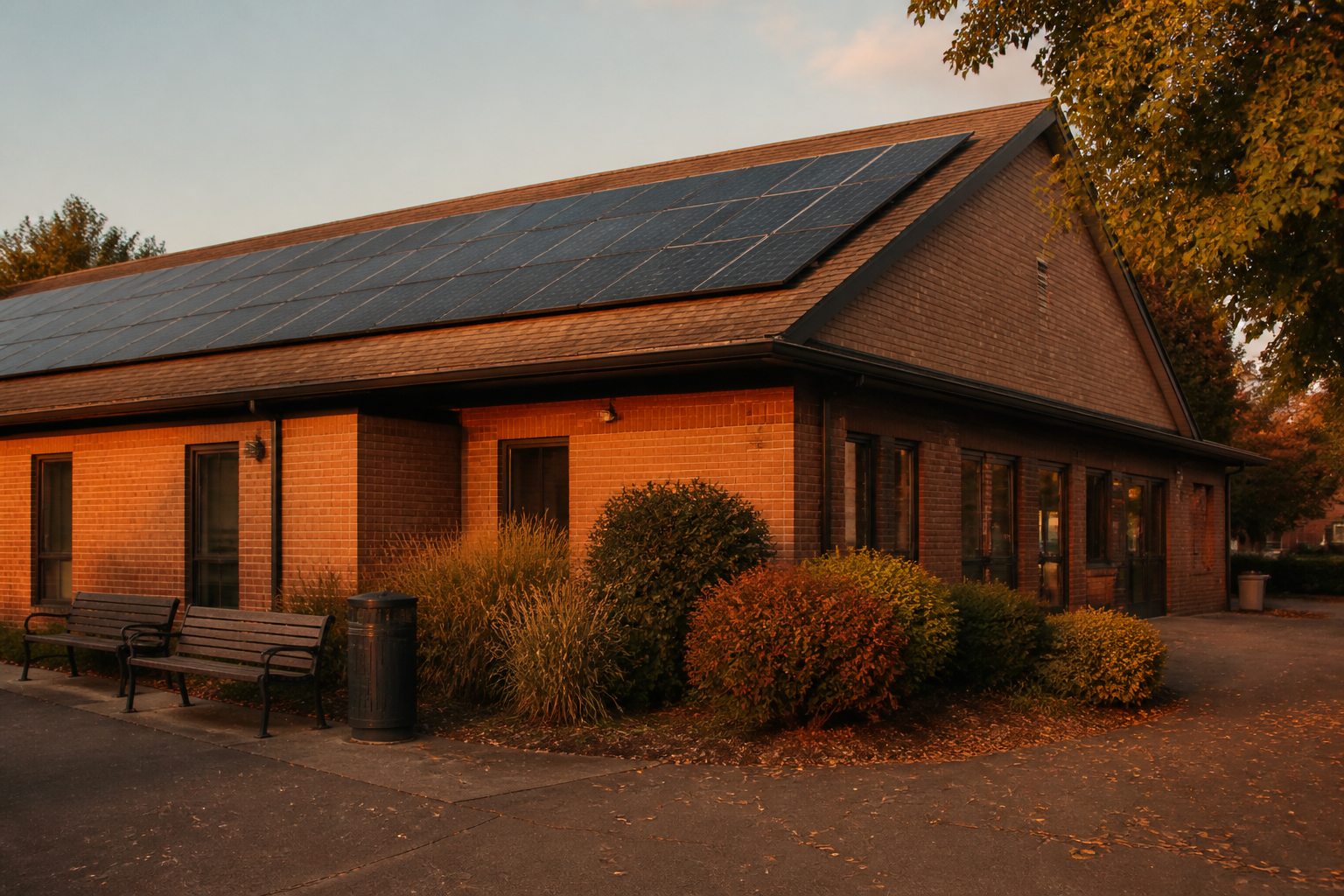
The UK government has launched a £30 million funding initiative titled People's Power to help local communities generate and control their own clean energy. The policy package aims to remove financial barriers for municipal and neighbourhood clean energy schemes, including community solar arrays, local heat networks, and shared energy storage systems.
As reported by GOV.UK on 17 September 2026, the programme provides direct financial backing to enable community organisations and local authorities to build scalable clean power assets. Writing in The Guardian on 17 September 2026, Greater Manchester Mayor Andy Burnham confirmed that nearly £30 million in capital funding has been committed to give residents genuine control over local energy generation and lower regional carbon emissions.
How the People's Power scheme operates
Community clean energy projects have historically struggled to secure early stage funding for feasibility studies, grid connection applications, and capital installation costs. Under the new package detailed by GOV.UK on 17 September 2026, community groups across England, Scotland, and Wales can access capital grants to deploy local clean power infrastructure.
Target projects include rooftop solar PV installations on civic buildings, localized battery storage facilities, micro hydro generation, and district heat networks. By developing local energy assets, community groups can retain the revenue generated from power sales or supply lower cost electricity directly to participating residents through local supply agreements.
All installations delivered under the fund must comply with established UK technical standards, requiring installation work to meet Microgeneration Certification Scheme (MCS) criteria, TrustMark quality assurance, or relevant National Inspection Council for Electrical Installation Contracting (NICEIC) standards.
Key details of the People's Power initiative

| Scheme Feature | Details and Parameters |
|---|---|
| Total Allocated Funding | Nearly £30 million across Great Britain (GOV.UK, 17 September 2026) |
| Primary Project Types | Rooftop solar PV, local battery storage, community heat networks |
| Eligible Applicants | Community benefit societies, local authorities, parish councils, town trusts |
| Key Technical Requirement | MCS accreditation, TrustMark quality standards, NICEIC compliance |
| Geographic Scope | England, Scotland, and Wales |
| Primary Objective | Lower local power bills, increase energy resilience, accelerate net zero targets |
What the numbers say
Data published by GOV.UK on 17 September 2026 confirms that nearly £30 million in capital funding has been unlocked under the People's Power initiative. The Department for Energy Security and Net Zero indicates that this capital is structured to crowd in private and local investment, maximizing the volume of renewable generation built per public pound.
In his commentary published by The Guardian on 17 September 2026, Andy Burnham highlighted that Greater Manchester alone will utilize part of the funding to scale up local clean energy assets, helping town halls and community organizations generate clean electricity closer to where it is consumed.
While the £30 million funding package represents a significant commitment to local power projects, independent energy analysts point out that community generation remains a modest fraction of total UK electricity supply. For context, research published by edie on 16 September 2026 noted that the UK clean energy transition as a whole will require £511 billion of investment between 2026 and 2040 across commercial, grid, and domestic sectors.
What this means for your home
For individual households, the People's Power initiative provides an indirect boost to local grid resilience and community energy options, but it does not supply individual home grant funding. If you are looking to lower your energy bills or install clean technology directly on your own roof, you must still fund your domestic system through personal capital, green financing, or workplace scheme benefits.
If your local community group or parish council sets up a solar microgrid or neighbourhood battery project under this fund, you may eventually have the opportunity to buy locally generated electricity at a discounted rate. However, setting up community energy schemes, securing grid connection approvals from Distribution Network Operators (DNOs), and completing construction typically takes 12 to 24 months.
If you want immediate control over your domestic energy costs, installing home solar panels (typically a 4 kWp to 6 kWp array) paired with a home battery (5 kWh to 10 kWh capacity) or a heat pump remains the most direct route. Domestic installations continue to benefit from zero percent VAT on qualifying clean technology equipment across Great Britain.
What this means for employers
For HR directors, reward managers, and sustainability leads, public funding announcements like the People's Power scheme keep energy prices and net zero goals at the top of employee interest. However, community projects take time to construct and rarely offer direct bill reductions for individual remote workers or commuting staff in the short term.
Employers seeking to provide immediate, practical support for staff facing high living costs can offer direct access to domestic green technology. Through the Net Zero Home Scheme, employers can give staff access to member pricing on solar panels, heat pumps, battery storage, and plug-in solar installed by accredited MCS installers across England, Scotland, and Wales. Delivered by Net Zero Benefits alongside The Electric Car Scheme, the UK's largest independent salary sacrifice provider, the scheme is completely free for employers to implement, involving no salary sacrifice and no payroll deduction.
Providing tangible pathways for employees to upgrade their homes complements broader community energy goals while delivering immediate financial relief on utility costs.
Frequently asked questions
Can individual homeowners apply directly to the People's Power fund?
No. The £30 million People's Power fund reported by GOV.UK on 17 September 2026 is designated for community organizations, local authorities, and neighbourhood trusts rather than individual householders. Homeowners seeking personal solar or heat pump funding should look to existing domestic initiatives such as the Boiler Upgrade Scheme or zero VAT ratings on domestic installations.
How quickly will community energy projects operationalize?
Community projects typically take between 12 and 24 months from grant award to commercial operation. Groups must secure planning permissions where required, complete structural roof assessments, obtain DNO grid connection approvals under G99 rules, and procure MCS-accredited contractors.
Do community solar schemes affect household smart tariffs?
Participation in a community energy scheme does not restrict your choice of domestic energy tariff. You remain free to choose your electricity supplier and select dynamic, time-of-use, or standard fixed tariffs for your household connection.