Why Solar Immersion Diverters Do Not Always Save Money
Solar immersion diverters send excess power to your hot water tank, but export tariff rates and gas prices dictate whether they actually cut your bills.
- Written by
- Net Zero Home Scheme editorial team
- Last updated
- Topic
- solar, energy efficiency, tariffs

Many UK householders assume that routing excess solar generation straight into a domestic hot water cylinder is automatically the smartest economic move. Solar immersion diverters are frequently sold as devices that deliver free hot water by capturing power that would otherwise spill back into the grid. While the basic physics of turning surplus electricity into thermal energy is straightforward, modern UK energy pricing makes the financial calculation far more nuanced. Depending on your export tariff rate, your primary heating fuel, and seasonal boiler efficiency, sending solar power into your immersion heater can sometimes cost you more in lost export income than it saves on your gas or heating oil bill.
How does a solar immersion diverter redirect excess rooftop power?
A solar immersion diverter monitors the electrical current flowing across your mains electricity meter and modulates power to your hot water tank whenever solar generation exceeds home consumption.
The system relies on a current transformer sensor clamped around the main incoming electricity supply cable. This sensor measures the magnitude and direction of current multiple times per second. When the sensor detects net export, a solid-state relay inside the diverter opens and routes surplus power directly to the electric immersion heater in your hot water cylinder.
Unlike standard electric switches that operate on a simple on-off basis, an immersion diverter uses proportional control, such as pulse-width modulation or phase-angle control. If your solar panels are generating 1.5 kW of surplus electricity above your background domestic load, the diverter delivers precisely 1.5 kW to a standard 3 kW immersion element rather than drawing the remaining 1.5 kW from the grid.
The physical limit of this process is governed by thermodynamics and safety devices. Electric immersion heaters turn electrical energy into heat at 100% thermal efficiency, meaning 1 kWh of electricity generates exactly 1 kWh of thermal energy. However, once the cylinder water reaches the temperature set on its mechanical thermostat, typically between 60°C and 65°C, the thermostat contacts open to prevent scalding or over-pressurisation. At that point, the diverter must cease routing power to the tank, and any remaining surplus power flows out to the wider electrical grid.
Why does the math between export tariffs and boiler fuel matter?
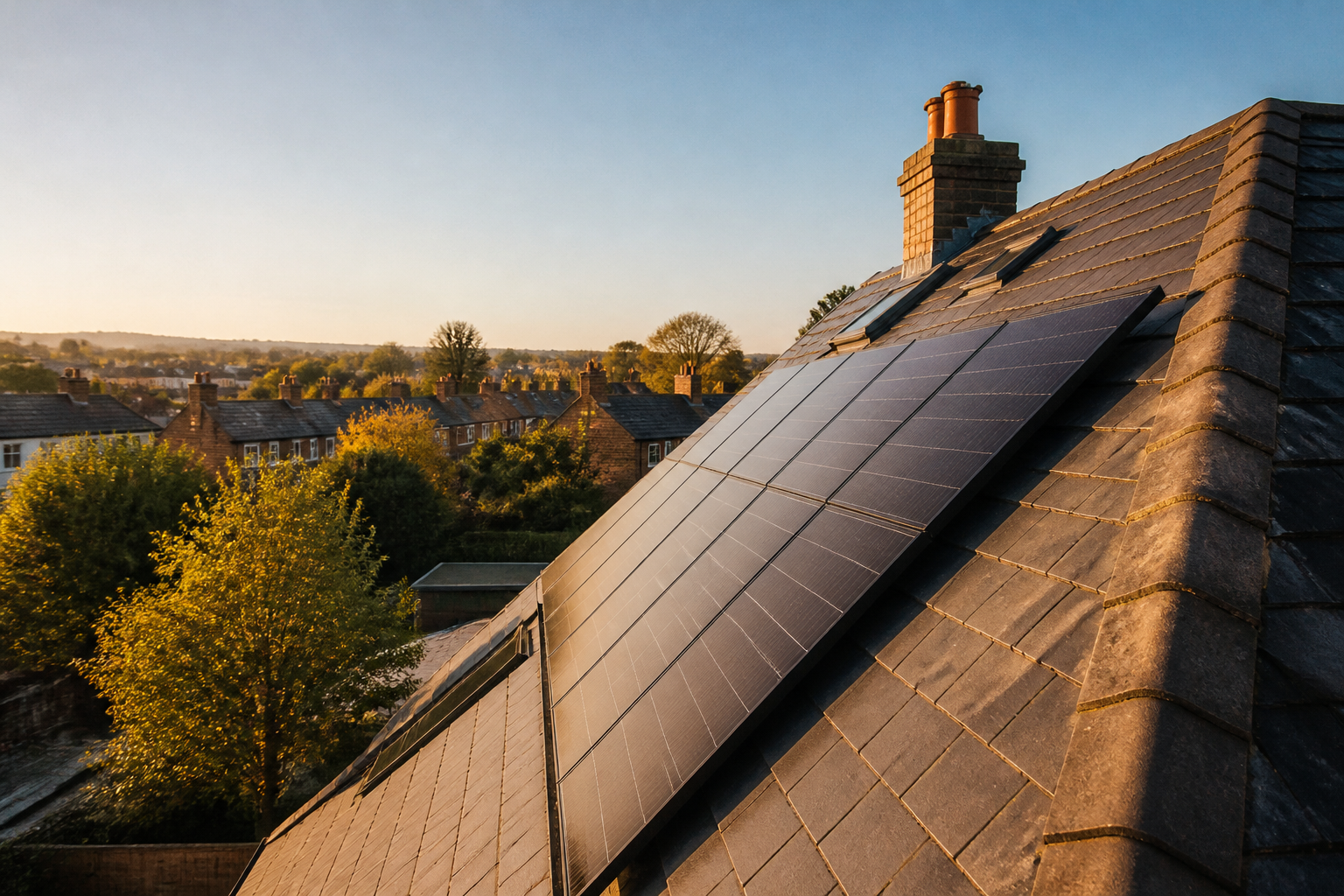
Heating water with diverted solar electricity saves you the cost of running a boiler, but forfeits the export payment you would have received by sending that power into the grid.
To determine whether diverting power saves money, you must compare the effective cost per kilowatt-hour of thermal heat produced by your primary boiler against the export payment rate offered by your energy supplier under the Smart Export Guarantee or a commercial export contract.
For a householder heating water with a modern A-rated gas condensing boiler, the economics depend on wholesale fuel prices regulated by Ofgem. Under Ofgem's standard variable price cap rates in late 2024, mains gas costs approximately 6.3p per kWh. A well-maintained gas boiler operates at roughly 85% seasonal efficiency when heating a hot water cylinder, as heat is lost through flue gases and pipework. Dividing the gas unit rate of 6.3p by 0.85 yields an effective thermal heat cost of approximately 7.4p per kWh.
If your energy supplier pays a standard fixed export tariff of 15p per kWh for electricity sent to the grid, every kilowatt-hour of solar generation exported earns 15p in cash credit. If you divert that same kilowatt-hour into your immersion tank instead, you avoid spending 7.4p on gas, but you give up 15p of export revenue. In this scenario, using the diverter results in a net loss of 7.6p for every kilowatt-hour redirected into the hot water tank.
| Heating Source or Grid Option | Cost or Return per Thermal kWh | Financial Result vs 15p Export Payment | Primary Use Case |
|---|---|---|---|
| Smart Export Guarantee (Fixed Tariff) | Pays 15.0p per kWh | Baseline grid export return | High export tariffs where grid sale beats fuel savings |
| Mains Gas Condensing Boiler (85% Efficient) | Costs 7.4p per thermal kWh | Diverting solar loses 7.6p per kWh | Mains gas homes with competitive export rates |
| Heating Oil Boiler (85% Efficient @ 68p/litre) | Costs 8.0p per thermal kWh | Diverting solar loses 7.0p per kWh | Rural oil-heated homes with high grid export rates |
| Direct Electric Immersion (Standard Grid Rate) | Costs 24.5p per thermal kWh | Diverting solar saves 9.5p per kWh | Homes using standard rate grid power for hot water |
| LPG Boiler (80% Efficient @ 90p/litre LPG) | Costs 16.0p per thermal kWh | Diverting solar saves 1.0p per kWh | Off-grid LPG properties with lower export tariffs |
The discrepancy is even larger for homes equipped with an air source heat pump. Heat pumps operate at a Seasonal Coefficient of Performance (SCOP) typically between 2.5 and 3.5 for domestic hot water production. This means 1 kWh of electricity inputs produces 2.5 to 3.5 kWh of thermal heat. With a standard electricity tariff rate of 24.5p per kWh, a heat pump produces hot water at an effective thermal cost of roughly 7.0p to 9.8p per kWh. Diverting direct electrical solar energy into a resistive immersion heater at 100% efficiency bypasses the heat pump's thermodynamic multiplier, discarding the efficiency gain that the heat pump provides.
When does diverting solar power into your hot water tank make economic sense?
Using surplus solar power to heat domestic hot water makes financial sense when your export payment rate is lower than the effective cost per kilowatt-hour of your primary water heating fuel.
For householders on basic Smart Export Guarantee tariffs that pay between 3p and 5p per kWh, diverting solar electricity to displace 7.4p gas or 8.0p heating oil delivers a clear net saving. In these cases, every kilowatt-hour sent to the water tank saves 2.4p to 4.4p compared to exporting it.
There are also operational benefits that extend beyond unit rate calculations:
- Summer boiler shutdown: Running a fossil fuel boiler during warm summer months solely to heat a cylinder forces the boiler to cycle frequently at low capacity, which accelerates mechanical wear and reduces seasonal efficiency. Diverting solar energy allows householders to switch their boiler off entirely for several months.
- Off-grid fuel displacement: Properties relying on liquefied petroleum gas (LPG) or direct electric heating face far higher hot water production costs. Heating water via direct electric immersion at standard grid rates costs around 24.5p per kWh. Diverting solar power into the tank saves 9.5p per kWh compared to exporting at 15p.
- Standing charge avoidance: For homes seeking to disconnect from the gas network entirely to eliminate annual gas standing charges, which average over £100 per year under Ofgem rules, solar immersion diverters provide a simple summer hot water bridge alongside heat pump retrofits.
Householders should weigh these physical and financial trade-offs against installation costs. A quality solar immersion diverter costs between £300 and £600 fully installed by an MCS-accredited electrician. If the annual net saving is modest due to a strong export tariff, payback periods can stretch beyond five to eight years.
How can employers help staff cut energy bills without extra admin?
Employers looking to support staff with rising domestic utility costs can introduce workplace environmental benefits that require zero payroll administration or ongoing corporate management.
HR leads often face tight administrative budgets and limited capacity, making complex salary sacrifice or benefit structures impractical to launch. Turn-key scheme delivery provides a simple path to helping employees lower home running costs while supporting sustainability targets.
Through The Net Zero Home Scheme, delivered by the team behind The Electric Car Scheme and The Charge Scheme, employers can give staff access to up to 15% savings on solar panels and a battery on their roof installed by vetted, accredited installers across England, Scotland and Wales. The benefit is completely free for employers to implement, requires no salary sacrifice or payroll modifications, and allows workers to make informed choices about how they store or export their clean household energy.
Sources
- Energy Price Cap, Ofgem
- Smart Export Guarantee (SEG), Ofgem