UK Launches Cabinet Taskforces to Tackle Cost of Living
The UK government has created three cross-government taskforces within Downing Street to address systemic cost of living issues and energy infrastructure reform.
- Written by
- Net Zero Home Scheme editorial team
- Last updated
- Topic
- energy bills, policy, energy efficiency

On 2 September 2026, GOV.UK announced that the Prime Minister has established three new cross-government taskforces operating directly within the Office of the Prime Minister and Cabinet. The new bodies are tasked with addressing systemic cost of living challenges, improving public control of essential infrastructure, and driving local community regeneration as part of wider plans to rewire Britain.
The initiative places domestic energy affordability and utility reform at the centre of Downing Street policy development. By locating the taskforces in the core of central government, ministers intend to coordinate strategy across energy, housing, and social policy departments to mitigate ongoing financial pressures facing UK households.
Structure and scope of the central taskforces
The central taskforces will focus on cross-cutting economic problems that fall between traditional departmental boundaries. High energy expenses, slow grid connections, and fragile supply chains have kept household spending elevated despite broader economic stabilization efforts.
While detailed operational mandates are expected in coming months, the government indicated that the work streams will evaluate structural reforms across retail energy markets, network delivery, and community capital projects. The goal is to establish policy frameworks that reduce essential utility costs while speeding up infrastructure deployment across England, Scotland, and Wales.
What the numbers say
Official releases document the immediate administrative baseline established by central government:
- 3 new cross-departmental taskforces launched within the Office of the Prime Minister and Cabinet, according to GOV.UK reporting on 2 September 2026.
- 1 central strategy aimed at unifying cost of living interventions, utility governance, and local regeneration projects across central government departments on 2 September 2026.
Because the administrative bodies are newly formed, specific multi-year expenditure targets and quantifiable bill reduction metrics have not yet been published by central departments. Policy analysts note that structural reforms to utility regulation and infrastructure investment typically require extended implementation windows before showing up as reduced retail energy tariffs.
| Focus area | Central taskforce objective | Practical action for households |
|---|---|---|
| Energy costs | Mitigate structural cost of living pressures | Install solar PV and heat pumps to reduce grid imports |
| Grid delivery | Accelerate national infrastructure upgrades | Deploy home battery storage to manage peak demand |
| Community resilience | Rebuild local infrastructure and housing | Draught-proof and insulate properties to cut heat loss |
| Financial wellbeing | Align cross-departmental relief policies | Utilize workplace environmental benefits for home retrofits |
What this means for your home
While central government taskforces work on long-term policy and regulatory frameworks, household energy bills remain sensitive to global gas price fluctuations and network standing charges. For individual homeowners and tenants, waiting for central market rewiring will not solve immediate heating and electricity overheads.
To build long-term insulation against price volatility, households are increasingly taking direct control of their energy generation and demand. Key practical technologies to evaluate include:
- Solar PV systems: Installing a standard 4 kWp roof array can generate roughly 3,400 kWh of clean electricity annually in central UK conditions, directly offsetting daytime utility consumption.
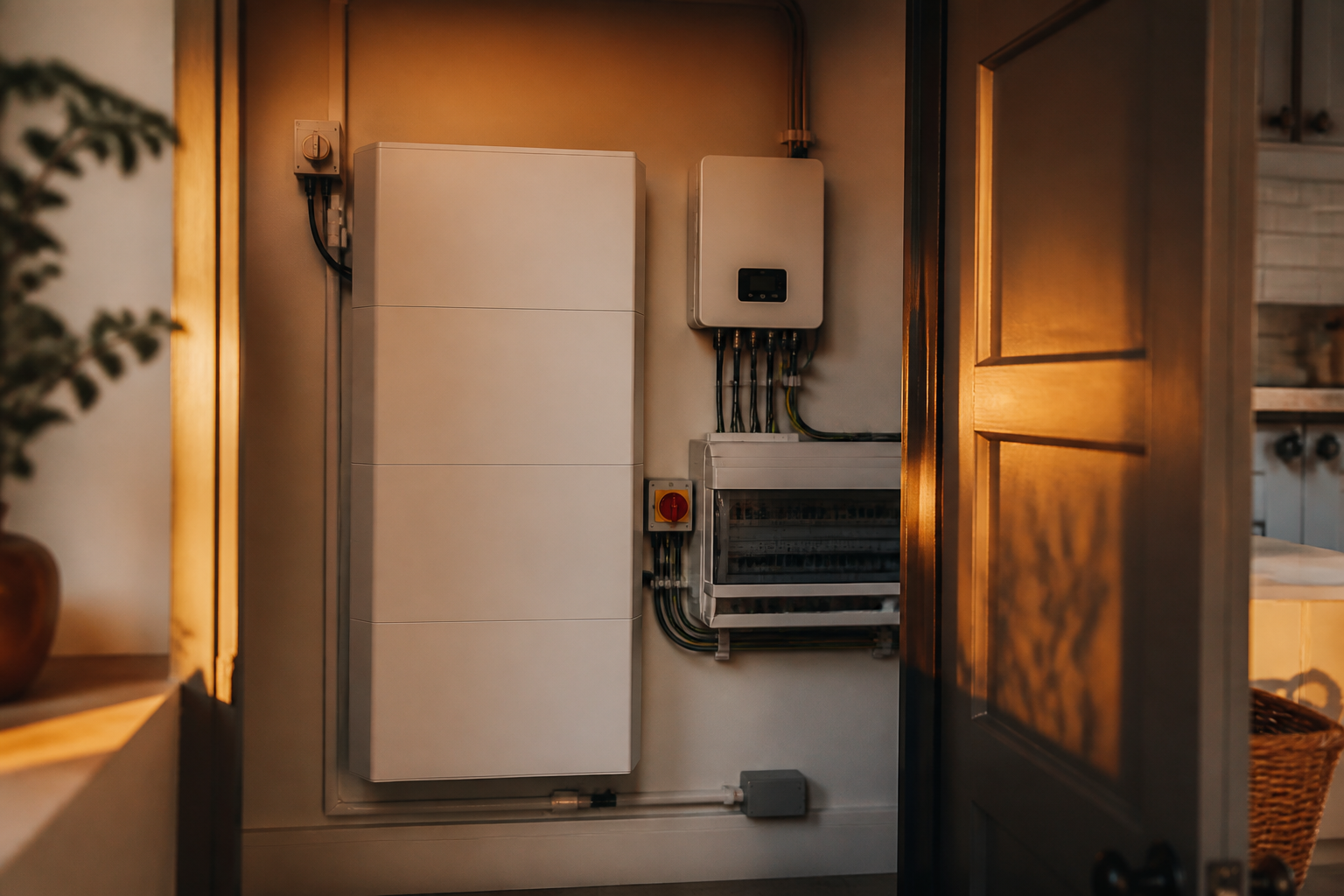
- Battery storage: Pairing solar panels or smart tariffs with a 5 kWh to 10 kWh home battery allows you to store lower-cost off-peak electricity or excess daytime generation for use during high-rate evening hours.
- Heat pumps: Replacing a traditional gas boiler with an air source heat pump operating at a Seasonal Coefficient of Performance (SCOP) of 3.2 delivers over three units of heat for every unit of electricity consumed, bypassing fossil fuel markets entirely.
- Plug-in solar and smart controls: For smaller homes or renters where full roof installations are difficult, smaller scale solutions and smart thermostatic radiator valves help eliminate unnecessary heating waste.
When planning home upgrades, ensure all installations are carried out by certified professionals holding relevant standard accreditations, such as the Microgeneration Certification Scheme (MCS) and TrustMark, to guarantee quality, safety, and access to available grants.
What this means for employers
For human resources, reward, and corporate social responsibility teams, the persistent focus on cost of living highlights the deep connection between financial wellbeing and employee performance. Domestic energy expenses remain a major driver of household budget stress across UK workplaces.
As staff seek practical assistance with living expenses, forward-thinking reward leaders are expanding employee benefits packages beyond traditional salary reviews. Supporting workforce home energy efficiency directly targets essential operational expenses without inflating ongoing wage liabilities.
Employers looking to support staff with rising domestic expenses can offer practical options such as the Net Zero Home Scheme, which gives employees member pricing on accredited solar, heat pump, and battery installations at zero cost to the employer and without salary sacrifice or payroll deduction.
By helping employees lower their home power and heating bills, organisations improve financial resilience across their workforce while simultaneously advancing corporate carbon reduction targets.
Frequently asked questions
When will the new Cabinet taskforces publish their policy recommendations?
The government announced the creation of the taskforces on 2 September 2026, with detailed timelines and departmental proposals expected to emerge during upcoming parliamentary sessions and autumn policy reviews.
How quickly do national energy reforms reduce individual household bills?
Major regulatory changes and national grid upgrades usually take several years to affect consumer billing structures. Direct home energy upgrades, such as insulation, solar panels, and heat pumps, provide much faster financial relief by lowering grid dependence immediately upon commissioning.
Can employers offer home energy upgrades without complex payroll administration?
Yes. Non-salary sacrifice models allow businesses to provide discounted access to accredited home energy installers without requiring payroll deductions, tax adjustments, or internal administrative overhead.