Retailers Launch Plug-In Balcony Solar Systems Across UK
UK retailers are launching plug-in balcony solar kits from 27 August 2026 following regulatory updates allowing direct socket connection for self-installation.
- Written by
- Net Zero Home Scheme editorial team
- Last updated
- Topic
- solar, energy efficiency, energy bills
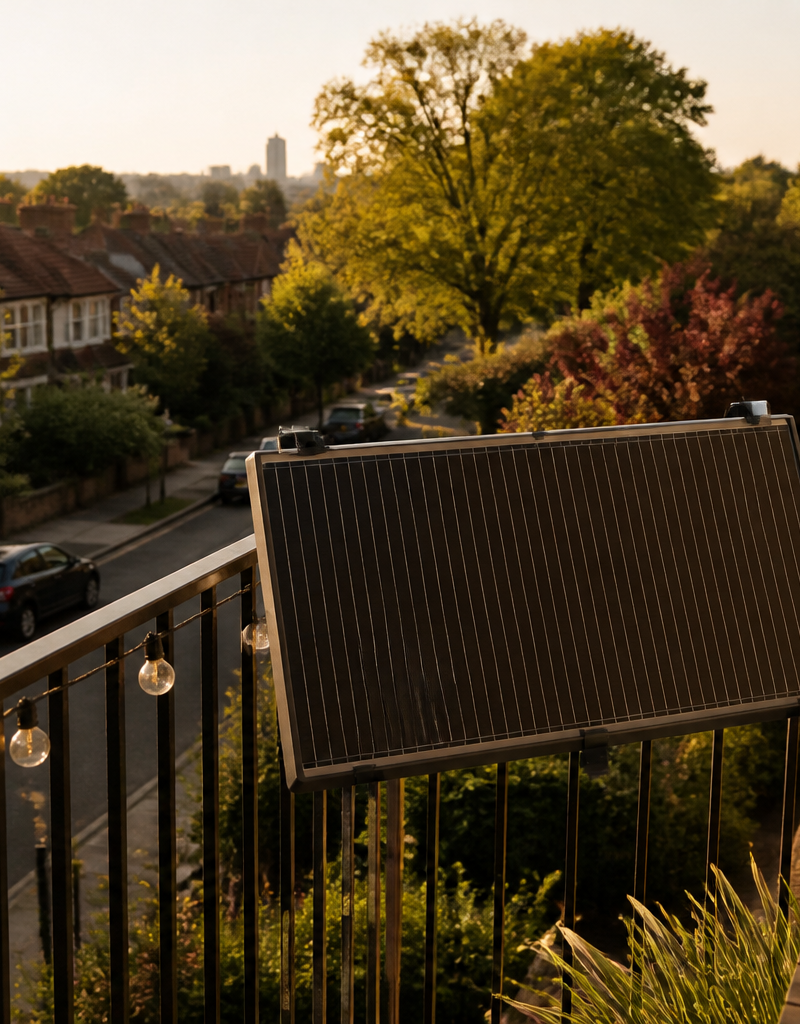
UK households will be able to buy plug-and-play balcony solar kits for direct self-installation from 27 August 2026, marking a major shift in how small-scale generation is sold and connected in Great Britain. As reported by The Guardian on 22 August 2026, the retail rollout of these lower-cost units allows flat owners and private renters to generate their own clean electricity without needing traditional rooftop installation.
The launch follows updated technical guidance that permits certified microinverter systems to plug directly into standard 13-amp domestic wall sockets. By eliminating scaffolding costs and structural roof modifications, the technology aims to lower the barrier to entry for millions of households previously excluded from solar power.
What the numbers say
Reporting by The Guardian on 22 August 2026 highlights several key figures and parameters surrounding the introduction of plug-in solar systems to the UK market:
- Retail availability date: Consumer sales of plug-in balcony kits begin nationwide on 27 August 2026.
- Capacity limits: Most entry kits feature panel capacities ranging between 300W and 800W, matching the maximum AC output allowed under simplified grid connection standards.
- System pricing: Complete starter kits, including a solar panel, mounting brackets, integrated microinverter, and grid connection cable, are priced significantly lower than full rooftop installations, which typically cost between £5,000 and £9,000.
- Baseline coverage: An 800W balcony system in the UK can generate between 500 kWh and 700 kWh of electricity per year, depending on orientation and shading, which is sufficient to cover the continuous daytime baseline load of an average home.
| System Attribute | Plug-In Balcony Solar Kit | Standard Rooftop Solar Array |
|---|---|---|
| Typical System Capacity | 300W to 800W | 3.0kW to 6.0kW |
| Electrical Connection | Standard 13A Wall Socket / Dedicated Outlet | Hardwired directly to Consumer Unit |
| Installation Requirement | Self-Assembly / DIY | Accredited Professional Electrician |
| Property Suitability | Flats, Apartments, Rented Homes, Terraces | Privately Owned Houses with Suitable Roofs |
| Portability | Easily Unplugged and Relocated | Permanent Structural Fixture |
| Grid Registration | Simplified DNO Notification | Standard G98 Notification or G99 Application |
Technical safety and socket rules
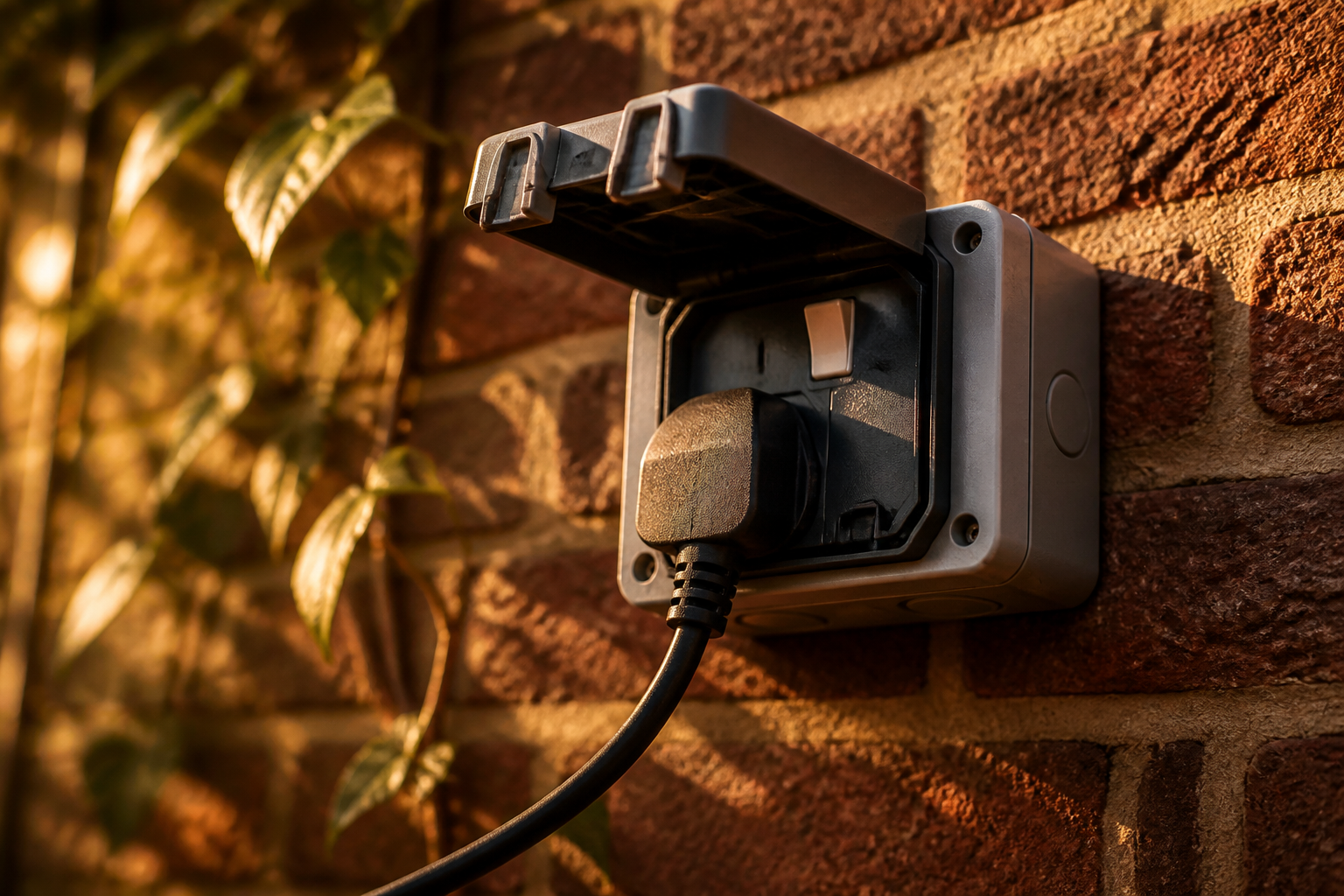
Unlike traditional solar arrays that feed high-voltage direct current (DC) into a central wall-mounted inverter, plug-in balcony systems use microinverters fitted directly to the back of each solar panel. The microinverter converts the panel's DC power into 230V alternating current (AC) synchronized with your home's electricity supply. When plugged into a standard wall socket, the generated power flows straight into your home circuit, where it is consumed first by any active electrical devices.
Safety is maintained through built-in grid protection relays, often referred to as anti-islanding protection. Under UK engineering standard G98, the microinverter must automatically shut down its power output within milliseconds if mains grid power is lost or if the plug is pulled from the socket. This prevents the pins of the plug from remaining live when exposed.
However, proper installation still requires careful attention to household wiring. The plugged-in circuit must be in sound condition and protected by a residual current device (RCD). Electrical safety guidance specifies that plug-in solar systems should never be connected via trailing multi-way extension leads, block adaptors, or smart plugs that are not rated for continuous bi-directional power flow. Outdoor sockets used for mounting panels on patios or garden walls must also maintain appropriate ingress protection (IP ratings) against moisture and dust.
What this means for your home
If you live in a flat or rent your home, the availability of plug-in solar creates a practical route to generating your own power. However, several operational factors determine whether a balcony system makes financial sense for your property.
First, assess solar exposure. Balcony railings, outer walls, or small garden patios must face South, East, or West and remain clear of heavy shading from adjacent buildings or trees. Because balcony panels are often mounted vertically on railings rather than tilted at optimal roof angles (30 to 40 degrees), winter generation will be modest, though vertical mounting can capture low winter sun reasonably well.
Second, check your property rights and tenancy terms. While plug-in panels do not alter the permanent structure of a house, mounting brackets attached to balcony balustrades may require approval from a landlord, freeholder, or building management company. In conservation areas or listed buildings, external visual alterations can also trigger local planning restrictions.
Third, understand the economics of self-consumption. Plug-in systems are designed to offset your home's immediate electrical base load, such as internet routers, refrigerators, standby electronics, and home office kit. Because small plug-in units are typically not registered for Smart Export Guarantee (SEG) payments, any surplus electricity you generate that is not consumed in your home immediately will spill back into the national grid without earning an export tariff. Matching your daily electricity habits to your generation profile is therefore essential for maximizing payback.
What this means for employers
As household energy bills remain a primary concern for working families, interest in lower-barrier generation tech like plug-in solar is accelerating across workforce demographics. HR, reward, and sustainability leads are seeing increased demand for guidance on energy management and practical support that helps employees control home running costs.
Offering access to clear technical advice and vetted equipment helps staff navigate new product categories safely, avoiding dangerous self-installations or non-compliant imported hardware that lacks required G98 safety certification.
The Net Zero Home Scheme provides employees with member pricing on accredited solar, heat pump, battery storage, and plug-in solar installations across England, Scotland, and Wales, delivered at zero cost to the employer with no salary sacrifice or payroll deduction required. By giving staff structured access to verified installers and compliant hardware, employers can support home energy resilience without taking on administrative or financial burden.
Frequently asked questions
Do plug-in solar panels require planning permission in the UK?
For most residential properties, small balcony solar panels fall under Permitted Development Rights, provided they do not project excessively beyond the building face. However, rules differ for listed buildings, designated conservation areas, or flats where external leasehold alterations are restricted by building management.
Can I earn money by exporting excess power from a plug-in solar kit?
In most cases, no. Earning export payments through the Smart Export Guarantee (SEG) requires an MCS-certified installation and formal registration with your electricity supplier. Plug-in systems are intended for self-consumption, meaning maximum savings come from using the power inside your home as it is generated.
Can I plug a balcony solar panel into a standard extension lead?
No. Microinverter manufacturers and electrical safety standards state that plug-in solar units must be connected directly into a permanently wired, RCD-protected wall socket. Using multi-way extension strips or thin flex cables creates a fire risk due to potential electrical overloading and improper earthing.
Sources
- Plug-in solar: could a low-cost panel cut your bills?, The Guardian